About Mounded Lpg Tanks
Mounded Lpg Tanks
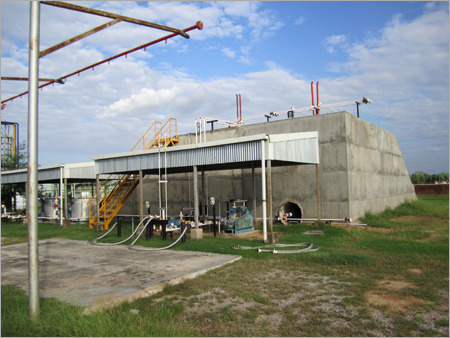
We are reckoned as a prominent manufacturer, exporter and supplier of Mounded Lpg Tanks. We provide necessary facility to design and install Mounded Lpg Tanks for proper storage of LPG, propane, chlorine, ammonia, ethylene oxide, carbon dioxide, nitrogen, hydrogen, propylene, ethanol, CNG, air, bio fuel, argon and so on. The special design and safety features of our LPG equipment is the result of our proper application of advanced manufacturing technique and our effort to upgrade ourselves regarding latest trends in gas storage system.
Key Features:
- Properly constructed with all safety guards
- Installation with all advanced techniques
- Durable, Longer service life
Engineered for Longevity and SafetyOur LPG mounded tanks utilize welded mild or carbon steel construction for enhanced structural reliability. Coupled with high-grade epoxy or bituminous protection, the tanks endure harsh underground environments and resist corrosion year after year, ensuring safety and effectiveness for decades.
Customizable Capacity and AccessoriesRanging from 5 KL to over 500 KL, our tanks can be tailored with various nozzle sizes, accessories, and outlet configurations. This ensures seamless integration for diverse industries, whether for bulk storage, gas dispensing, or large-scale commercial operations.
Advanced Protection and ComplianceCertified to global benchmarks such as ASME Section VIII and IS 2825, our tanks undergo rigorous hydrostatic testing and are accompanied by safety relief and excess flow valves. Their semi-buried design minimizes risks, while insulation preserves LPG quality and operational efficiency.
FAQs of Mounded Lpg Tanks:
Q: How are mounded LPG tanks installed and what benefits does the mounded (semi-underground) installation offer?
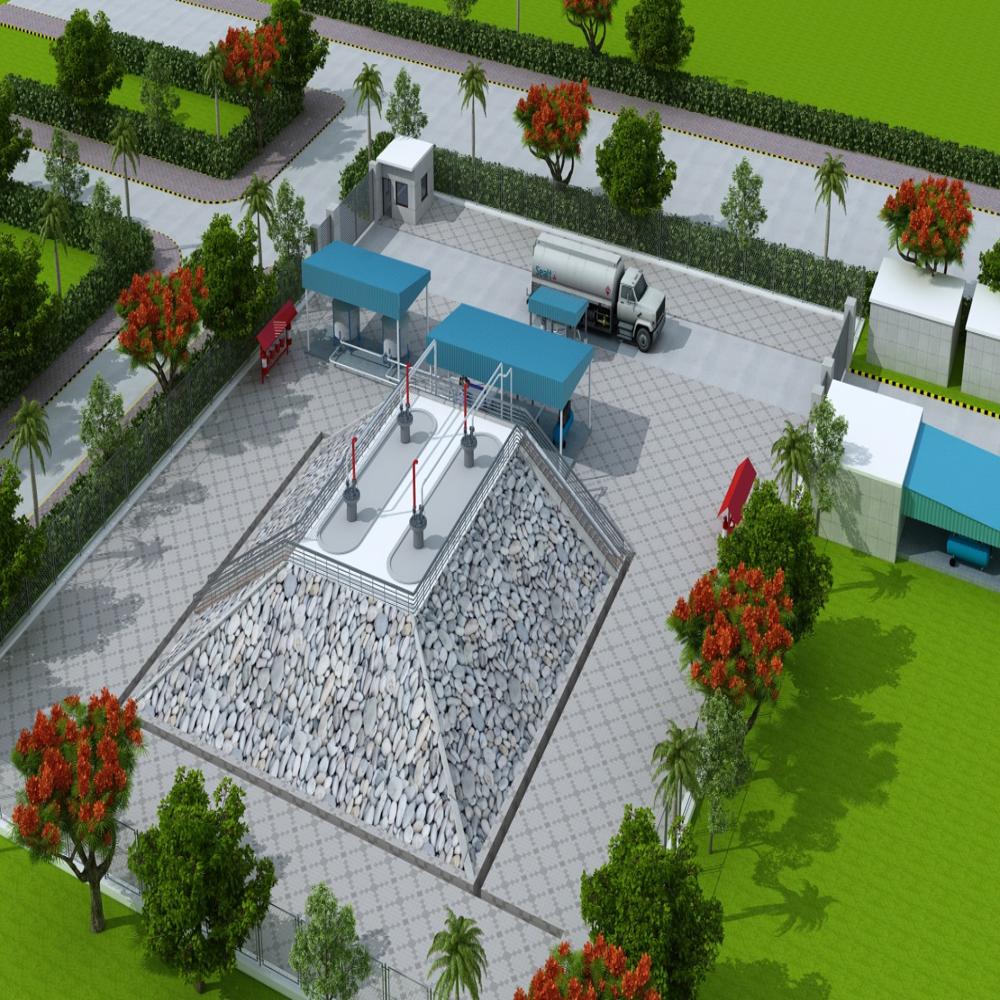
A: These tanks are installed partially or fully below ground, covered by earth. The mounded installation enhances safety by protecting the tank from external impacts, fire hazards, and unauthorized access while ensuring thermal insulation. This configuration substantially reduces risks associated with above-ground LPG storage.
Q: What materials and protective finishes are used for these tanks to resist corrosion?
A: The tanks are fabricated from mild steel (IS 2062/ASTM A516 Gr.70) or carbon steel, then coated with high-quality epoxy or bituminous anti-corrosive paint. This finish creates a durable, moisture-resistant barrier ideal for underground applications, prolonging operational life and minimizing maintenance needs.
Q: When and how should the tank undergo routine inspection and maintenance to ensure a 2030 year service life?
A: Regular annual inspections are recommended, focusing on checking safety valves, gauges, and the integrity of manholes and nozzle connections. Periodic maintenance includes cleaning, testing relief devices, and verifying corrosion protection layers. Following these guidelines ensures optimal longevity and safety.
Q: Where can these mounded LPG tanks be used and for what applications are they best suited?
A: These tanks are ideal for industrial, commercial, and Auto LPG dispensing facilities, as well as general LPG bulk storage and distribution. Their robust and secure design suits any setting that requires safe, large-volume LPG storage, especially where safety and regulatory compliance are paramount.
Q: What is the typical process for customizing tank size, nozzle arrangement, and flow rate?
A: Customization involves specifying the necessary capacity (5 KL to over 500 KL), selecting manhole dimensions, and defining nozzle arrangements according to the clients needs (inlet, outlet, safety valve locations, etc.). Flow rates up to 2000 Nm/hr and outlet sizes from 2 to 6 inches are available to match operational requirements.
Q: How is compliance with national and international safety codes assured for these tanks?
A: Tanks are manufactured following ASME Section VIII, Div. I, IS 2825, and are CCOE approved, ensuring adherence to strict safety, design, and testing standards. Each tank undergoes hydrostatic testing at 1.5 times design pressure, with mandatory documentation provided for full regulatory compliance.

 Send Inquiry



 Send Inquiry
 Send Inquiry
 Send SMS
 Call Me Free
 English
 Spanish
 French
 German
 Italian
 Chinese (Simplified)
 Japanese
 Korean
 Arabic
 Portuguese